
News
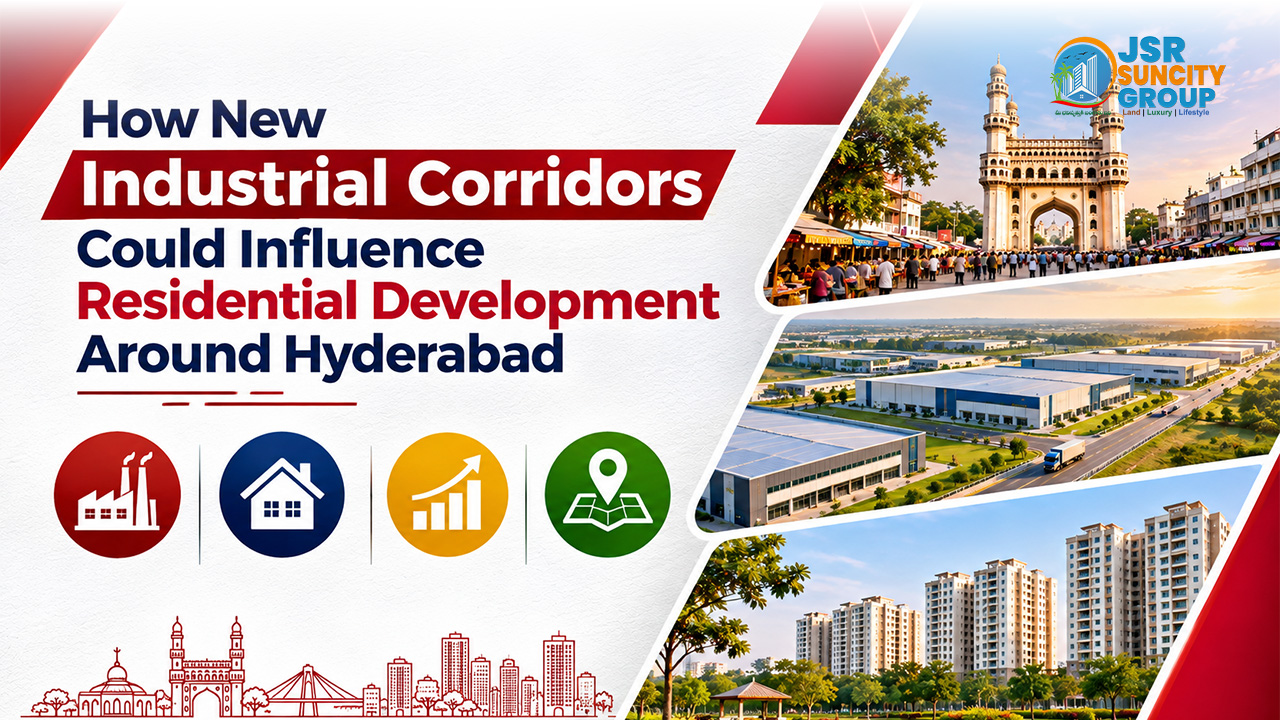
How New Industrial Corridors Could Influence Residential Development Around Hyderabad
Introduction
Hyderabad is steadily expanding beyond its traditional urban boundaries, supported by growing industrial activity, infrastructure development, and new employment opportunities. The development of industrial corridors around the city is expected to play an important role in shaping future residential growth and transforming emerging suburban locations into potential housing destinations.
With increasing investments in manufacturing, pharmaceuticals, logistics, electronics, and technology, several areas surrounding Hyderabad are attracting attention from developers, homebuyers, and real estate investors.
Industrial corridors do more than connect manufacturing centres. They encourage employment generation, improve transportation networks, attract supporting businesses, and create demand for residential communities.
As Telangana continues to strengthen its industrial infrastructure and regional connectivity, the relationship between industrial development and residential real estate is becoming increasingly important.
1. Industrial Corridors Driving Hyderabad's Expansion
Telangana's industrial development strategy identifies major connectivity and industrial growth routes, including the Hyderabad–Warangal, Hyderabad–Nagpur, and Hyderabad–Bengaluru corridors.
The state's longer-term development vision also identifies Hyderabad–Vijayawada connectivity as an important industrial development route.
These corridors are expected to support manufacturing clusters, logistics facilities, industrial parks, and regional economic development.
As industrial activity expands, nearby residential locations may benefit from increased employment opportunities and demand for housing.
2. Key Industrial Growth Zones Around Hyderabad
Several industrial and economic zones are influencing the city's future expansion.
Western Hyderabad – Patancheru and Sangareddy: Pharmaceutical, engineering, manufacturing, and industrial activity is supporting demand for residential development.
Northern Hyderabad – Medchal and Shamirpet: Life sciences, logistics, and industrial facilities are contributing to the region's economic growth.
Eastern Hyderabad – Ghatkesar and Yadadri Bhuvanagiri: Improved regional connectivity and industrial development initiatives could support future residential demand.
Southern Hyderabad – Shamshabad, Maheshwaram and Kothur: Airport connectivity, logistics parks, electronics manufacturing, and emerging economic projects are creating new development opportunities.
Zaheerabad: The proposed and developing industrial smart city is expected to strengthen manufacturing activity and regional economic growth.
Telangana's official investment portal identifies industrial parks, logistics facilities, electronics manufacturing clusters, and life sciences hubs across these regions.
3. Employment Generation and Housing Demand
One of the most significant impacts of industrial corridors is employment generation.
As manufacturing companies, logistics operators, pharmaceutical businesses, and supporting industries establish operations, they create demand for housing among employees, professionals, and business owners.
This can encourage demand for different residential segments, including:
- Affordable apartments for industrial employees.
- Mid-range residential communities for working professionals.
- Independent houses for families.
- Gated communities with modern amenities.
- Residential plots for long-term buyers.The growth of supporting services such as schools, hospitals, supermarkets, and entertainment facilities can further strengthen residential demand.
4. Improved Connectivity Supporting Suburban Development
Connectivity is a major factor influencing residential property demand.
The Outer Ring Road (ORR), proposed Regional Ring Road (RRR), national highways, and radial road networks are expected to improve access between Hyderabad and surrounding economic zones.
The Hyderabad Metropolitan Development Authority has extended the metropolitan region towards the proposed RRR, creating a broader planning framework for future regional development.
Better connectivity can make locations outside the established city limits more accessible for employment, education, and everyday activities.
As transportation infrastructure improves, residential development may gradually expand into emerging suburban locations.
5. Growing Opportunities for Residential Plots and Gated Communities
Industrial growth can create opportunities beyond conventional apartment development.
As employment centres expand, some homebuyers may prefer independent houses, residential plots, and gated villa communities in locations that offer convenient access to workplaces.
Developers may increasingly focus on:
- HMDA and DTCP-approved residential layouts, where applicable.
- Gated residential communities.
- Villa developments.
- Integrated townships.
- Affordable and mid-segment housing.
- Residential projects with access to major highways.
For buyers interested in open plots, locations with established infrastructure, clear land titles, and approved layouts may become attractive options.
6. Infrastructure Development Encouraging Real Estate Investment
Industrial corridors generally require supporting infrastructure such as roads, power supply, water systems, logistics facilities, and public services.
These developments can improve the overall attractiveness of surrounding locations.
Telangana's infrastructure initiatives include dedicated logistics parks at Mangalapally and Batasingaram, as well as industrial and logistics development around Zaheerabad and other regional centres.
Improved infrastructure can encourage residential developers to explore new locations and provide homebuyers with additional housing choices.
7. The Role of Future City and Regional Economic Development
Hyderabad's southern growth direction is receiving attention through the proposed Bharat Future City development and associated economic initiatives.
The state's development vision positions the wider Hyderabad region around interconnected urban, peri-urban, and rural economic zones, with industrial parks and innovation-focused developments forming part of the broader strategy.
Such initiatives could influence future demand for residential communities, supporting infrastructure, and commercial developments.
However, buyers should distinguish between operational projects, projects under construction, and proposals that are still at the planning stage.
8. Changing Residential Preferences Among Homebuyers
Industrial and infrastructure development may also influence the preferences of urban families.
As employment opportunities spread across different parts of the metropolitan region, buyers may increasingly consider homes closer to their workplaces rather than concentrating exclusively on established city locations.
Emerging preferences may include:
- Homes with convenient highway connectivity.
- Affordable residential communities.
- Properties near employment hubs.
- Gated communities with security and recreational facilities.
- Residential plots offering future construction flexibility.
This shift could support the development of new residential micro-markets around Hyderabad.
9. Important Factors Before Investing in Emerging Locations
Although industrial corridors can create real estate opportunities, buyers should evaluate properties carefully before investing.
Important considerations include:
- Industrial Project Status: Check whether the proposed industrial development is operational, under construction, or still awaiting approvals.
- Connectivity: Evaluate actual road access and travel times to major employment centres.
- Legal Approvals: Verify property titles, land-use permissions, and applicable HMDA or DTCP layout approvals.
- Infrastructure: Check water availability, electricity, drainage, and social infrastructure.
- Residential Demand: Assess existing housing demand and employment opportunities.
- Environmental Factors: Consider industrial pollution, water resources, and environmental restrictions.
- Investment Horizon: Avoid relying exclusively on speculative appreciation or unconfirmed infrastructure announcements.
10. Future Outlook for Hyderabad's Residential Real Estate Market
The expansion of industrial corridors, logistics infrastructure, and regional transportation networks could gradually reshape Hyderabad's residential real estate landscape.
Locations surrounding major employment centres may attract new housing projects, while established suburban markets could experience further development and infrastructure improvements.
The long-term growth of these locations will depend on actual industrial investments, employment generation, infrastructure completion, and planned urban development.
For developers and property investors, understanding these emerging economic corridors will be important when evaluating future residential opportunities.